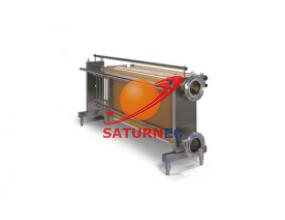
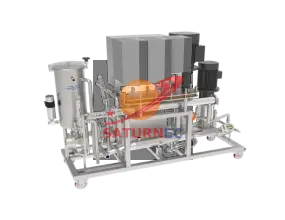
Alfa Laval designs, manufactures, and installs complete cross-flow membrane filtration systems based on polymer membranes. Our manufactured equipment is based on unique frame and plate modules or spiral elements of varying sizes. For some applications, a combination of both types can be used to provide the most optimal solution.
AL-mem

The Alfa Laval Membrane-UF system is an Ultra line cross-flow filtration unit designed for automatic, continuous product concentration control. The system provides cost-effective, standardized solutions for concentration-demanding instruments and is designed to minimize bulk storage and fat concentration in microorganisms.
Lowal De-alcoholizer
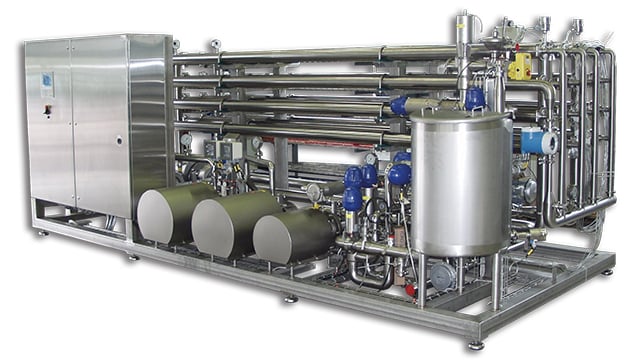
The Alfa Laval Lowal fully automated, closed-loop dealization system allows for the dealization of all types of beer and low-alcohol beverages in a single plant. The low-temperature processing preserves the beer's natural flavor and prevents flavor degradation even after dealization. The result is higher-quality low-alcohol or non-alcoholic beer and more energy-efficient production.
Ultrafiltration systems used in animal blood processing
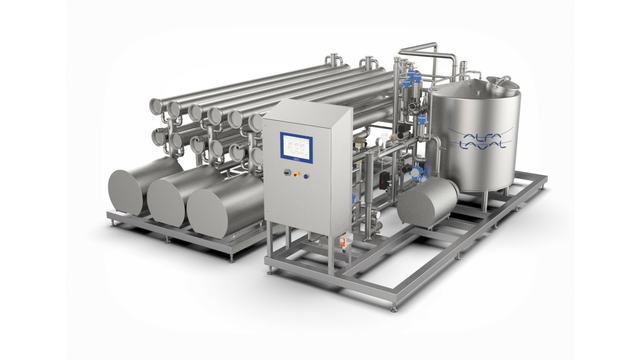
Alfa Laval Pro-UF Plasma systems are cross-flow ultrafiltration (UF) membrane devices with a hygienic design, ideal for animal blood processing. These ultrafiltration systems concentrate and purify animal blood plasma using Alfa Laval ultrafiltration membranes. With the water-saving and energy-efficient GreenClean cleaning process, Alfa Laval's animal blood processing equipment delivers reliable plasma production.

When processing animal blood plasma from bovine and pigs, the plasma is separated from the blood in two main stages. First, blood cells are removed using a separator. Second, the plasma proteins are preconcentrated in a membrane filtration system. Freshly separated plasma passes through multiple interconnected ultrafiltration membrane stages, where valuable proteins are gradually concentrated (retentate) while minerals and water pass through the membrane (permeate), improving protein purity.
Preconcentration in the ultrafiltration system increases protein levels from approximately 7% to 25%, depending on blood quality, and enhances protein purity up to 92% without using diafiltration water. By preconcentrating plasma proteins before final drying, the overall heat load and energy consumption are reduced, improving final product quality.
The system can remove up to 90% of the salt initially present in plasma (up to 1.5%). Depending on specific requirements, nanofiltration or reverse osmosis can be applied to retain more salt in the protein fraction.